

This post contains affiliate links. I may earn a commission if you make a purchase through these links, at no additional cost to you.
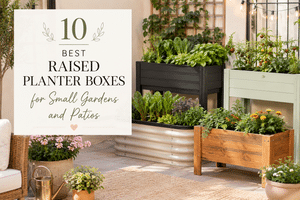
You don’t need a sprawling backyard to grow fresh herbs, colourful flowers or a few vegetables of your own. With the right raised planter box, even a compact balcony or patio can become a beautiful little garden.
Raised planters are especially useful when you’re short on space. They keep plants contained, can provide better control over the soil and often make gardening more comfortable by reducing how much bending and kneeling you need to do.
But the best raised planter box for you depends on more than appearance. A slim self-watering planter may be perfect for an apartment balcony, while a deeper modular bed will make more sense if you want to grow vegetables in your backyard.
To make the decision easier, I’ve selected 10 raised planter boxes for different spaces and gardening needs. This guide includes elevated wooden planters, vertical designs, self-watering options and durable metal garden beds.
Whether you’re creating your first herb garden or finally making use of an empty patio corner, these planters can help you grow more without sacrificing your entire outdoor space.
This post contains affiliate links. As an Amazon Associate, I earn from qualifying purchases. I may also earn a commission from other retailers when you shop through my links, at no additional cost to you.
Table of Contents
Best Raised Planter Boxes at a Glance
| Category | Raised planter | Best for | Material | Size |
|---|---|---|---|---|
| Best overall | Best Choice Products 48-Inch Elevated Wood Planter | Herbs, flowers and compact vegetables | Fir wood | 48 × 24 × 30 inches |
| Best for balconies | Keter Urban Bloomer | Small patios, balconies and herbs | Resin | 32.3 × 14.7 × 30.7 inches |
| Best vertical planter | Outland Living 4-Foot Vertical Garden | Growing several smaller plants vertically | Steel frame and polypropylene bins | 29 × 25 × 48 inches |
| Best modular metal bed | Vego Garden 17-Inch 4-in-1 Garden Bed | Backyard vegetables and flexible layouts | Coated metal | Four possible configurations |
| Best planter with wheels | Best Choice Products Mobile Elevated Wood Planter | Moving plants and organizing supplies | Fir wood | 48 × 24 × 32 inches |
| Best for deep-rooted vegetables | Best Choice Products 8 × 2 × 2-Foot Metal Garden Bed | Tomatoes, beans and deeper-rooted plants | Powder-coated steel | 96 × 24 × 24 inches |
| Best for organized herb planting | VegTrug 8-Pocket Herb Garden | Organizing herbs in separate pockets | Cedar wood | Approx. 30.7″ W × 22.8″ D × 31.5″ H |
| Best planter with trellis | Outsunny Two-Tier Wooden Planter with Trellis | Adding vertical greenery | Fir wood with metal corner brackets | 42.5″ W × 25.5″ D × 55″ H |
| Natural cedar option | Greenes Fence Cedar Elevated Garden Bed | Natural-looking patio gardens | Untreated cedar wood | 48″ L × 24″ W × 31″ H |
| Compact self-watering option | CITY PICKERS Patio Grow Box | Small patios and movable planting | Resin | 24.5″ × 20.5″ footprint |
How to Choose a Raised Planter Box
A raised planter should work with your available space, the plants you want to grow and the amount of maintenance you’re willing to handle.
Before choosing one based purely on how chic it looks—and I completely understand the temptation—consider these practical details.
Measure Your Available Space
Measure the exact area where you plan to position the planter. Leave enough room to walk around it, water your plants and reach the entire growing area comfortably.
If you are gardening on a balcony, remember that soil becomes very heavy after watering. Check your building’s rules and weight restrictions before adding a large planter.
For particularly compact areas, look for:
- Narrow rectangular planters
- Elevated planters with legs
- Vertical tiered gardens
- Planters with wheels
- Designs with built-in storage
Larger metal beds generally work better in yards, while slim elevated and vertical models are easier to accommodate on balconies and patios.
Choose the Right Planting Depth
The depth you need depends on what you intend to grow.
Herbs, lettuce and many flowers can grow in relatively shallow containers. Tomatoes, peppers and root vegetables generally need more room for their roots to develop.
As a simple starting point:
- Herbs and leafy greens: approximately 6–10 inches
- Flowers and compact vegetables: approximately 10–12 inches
- Tomatoes, peppers and root vegetables: approximately 12–18 inches or more, depending on the plant
Always confirm the requirements of the specific plants you want to grow before buying your planter.
Look for Proper Drainage
Drainage is essential because excess water needs somewhere to escape. Soil that remains saturated can create unhealthy growing conditions.
Look for drainage holes, drainage gaps or a controlled reservoir system. If you are placing a planter on a balcony or finished patio, you may also need a tray underneath to control runoff.
Compare the Materials
Wood
Wooden raised planters have a warm, natural appearance that works beautifully with farmhouse, cottage and traditional outdoor spaces. However, wood may need periodic maintenance to protect it from moisture and weather exposure.
Metal
Metal beds are durable and often provide more planting space. They are particularly useful for vegetables and backyard gardens. Dark metal can become warm in strong sunlight, so placement matters.
Resin and Plastic
Resin planters are lightweight, weather-resistant and generally easy to maintain. They are practical for balconies and patios, although they may not have the same natural appearance as wood.
Composite
Composite materials can deliver a wood-inspired appearance with less maintenance. These planters may cost more initially but can be worth considering if durability and appearance are equally important to you.
Consider Height and Portability
Elevated planters can make gardening more comfortable because you don’t need to bend as far to reach the soil.
If sunlight shifts across your patio, a planter with lockable wheels may be more practical. Just remember that a container becomes considerably heavier after it has been filled with soil and water.
How These Raised Planters Were Selected
The planters in this guide were selected by comparing:
- Planting capacity and depth
- Overall footprint
- Drainage features
- Material and maintenance requirements
- Ease of access
- Portability
- Suitability for smaller spaces
- Versatility
- Overall style
- Value for the intended use
Because every outdoor space is different, there is no single planter that will work for everyone. The goal is to help you identify which design best matches your space, plants and gardening routine.
1. Best Overall: Best Choice Products 48-Inch Elevated Wood Planter
Best for: Herbs, flowers and compact vegetables on a patio or deck
Product: Best Choice Products 48 × 24 × 30-Inch Elevated Wood Garden Planter
The Best Choice Products Elevated Wood Planter earns the best-overall position because it combines generous planting space with a comfortable working height and a classic wooden design.

It measures approximately 48 inches long, 24 inches wide and 30 inches high. Its five-cubic-foot planting area provides room for a combination of herbs, flowers or appropriately spaced vegetables.
The planter is made from Chinese fir wood and comes with a liner that separates the soil from the wooden frame. It also allows excess water to drain instead of collecting around the roots.
At 30 inches high, the planting bed is easier to access than a traditional ground-level garden. Its natural wood finish also makes it feel more like part of your outdoor décor than a purely functional gardening container.
Why It Made the List
- Five cubic feet of planting space
- 30-inch elevated working height
- Included bed liner
- Designed to allow excess water to drain
- 200-pound stated weight capacity
- Warm wooden design that suits patios and decks
Things to Consider
The planter is made from fir rather than naturally decay-resistant cedar. Consider using an appropriate food-safe wood treatment if it will be exposed to frequent rain or intense weather.
It also requires assembly, and the natural finish may change over time if left untreated.
Who Should Choose It?
Choose this planter if you want a versatile elevated bed with enough space for a small mixed garden. It is particularly suitable for someone who prefers the warmth of wood and wants to avoid working directly at ground level.
2. Best for Balconies: Keter Urban Bloomer Raised Garden Bed
Best for: Herbs and compact plants on apartment balconies or narrow patios
Product: Keter Urban Bloomer 12.7-Gallon Elevated Garden Bed
If you want to create a small herb garden without taking over your entire balcony, the Keter Urban Bloomer is one of the most practical options in this guide.
It measures approximately 32.3 inches long, 14.7 inches wide and 30.7 inches high. The narrow footprint makes it easier to position against a balcony wall or along the edge of a compact patio.

The 12.7-gallon planting container includes a water reservoir, water-level gauge and controllable drainage system. The gauge helps indicate when the planter needs more water or when excess water should be drained.
It also has a small seed-starting tray, which is a useful addition for anyone who wants to begin growing herbs or flowers from seed.
The graphite resin construction provides a subtle wood-inspired texture without requiring the maintenance associated with a traditional wooden planter.
Why It Made the List
- Narrow profile for compact outdoor areas
- 12.7-gallon planting capacity
- Built-in water reservoir
- Water-level gauge
- Controllable drainage plug
- Elevated working height
- Weather-resistant resin construction
- Included seed-starting tray
Things to Consider
The Urban Bloomer is better suited to herbs, flowers, lettuce and smaller plants than vegetables that require extensive root space.
A self-watering system also does not mean the plants can be ignored completely. You will still need to monitor soil moisture and adjust watering based on the plants, temperature and sunlight.
Who Should Choose It?
This is the best fit for an apartment dweller or beginner who wants a manageable herb garden in a narrow outdoor space. It is also an excellent choice if you frequently forget to water and would appreciate a visible water gauge.
3. Best Vertical Planter: Outland Living 4-Foot Vertical Garden
Best for: Growing multiple herbs, greens, strawberries or flowers in minimal floor space
Product: Outland Living 4-Foot Vertical Raised Garden Bed
When floor space is limited, growing upward can make far more sense than adding another wide planter. The Outland Living 4-Foot Vertical Garden uses five stacked planting bins to create a generous growing area within a compact footprint.

The complete unit measures approximately 29 inches long, 25 inches deep and 48 inches high. It creates around 10 linear feet of growing space while occupying approximately six square feet of floor space.
The five 12-litre planting bins are made from food-safe polypropylene. They are supported by a powder-coated steel frame designed for indoor or outdoor use.
The separate tiers also make it easy to organize different plants. You could use one level for cooking herbs, another for salad greens and the remaining sections for strawberries, flowers or succulents.
Visually, the tiered design creates a beautiful wall of greenery, which can help soften an otherwise plain balcony or patio.
Why It Made the List
- Five separate planting levels
- Compact vertical footprint
- Approximately 10 linear feet of growing space
- Food-safe polypropylene planting bins
- Powder-coated steel frame
- Suitable for indoor or outdoor use
- Available with different bin colours
Things to Consider
The upper tiers may cast some shade on the plants below, depending on the direction of the sunlight. Arrange plants according to their light requirements and rotate the unit only if it can be moved safely.
The individual containers are better for herbs, greens, strawberries and flowers than large plants with extensive root systems.
Who Should Choose It?
Choose this vertical garden if you want to grow several smaller plants but have very little available floor space. It is especially useful for balconies, compact patios and anyone who likes the look of a layered edible garden.
4. Best Modular Metal Bed: Vego Garden 17-Inch 4-in-1 Raised Garden Bed
Best for: Backyard vegetables and gardeners who want a flexible layout
Product: Vego Garden 17-Inch Tall 4-in-1 Modular Metal Raised Garden Bed
The Vego Garden 17-Inch 4-in-1 Bed is a better match for a yard than a small apartment balcony, but it deserves a place in this guide because of its flexible modular design.
The kit can be assembled in four different configurations, allowing you to choose the shape that works best with your available garden space. That flexibility is especially helpful if you are working around a fence, pathway or unusually shaped yard.

Its 17-inch height provides more soil depth than most tabletop planters, making it suitable for a broader range of vegetables and deeper root development.
The panels use Vego Garden’s VZ 2.0 material, which combines a steel substrate with zinc, magnesium and aluminum coatings. The edges are finished with protective rubber edging.
The modern metal design feels clean and intentional, and the available colour options make it easier to coordinate the bed with the rest of your outdoor space.
Why It Made the List
- Four possible configurations
- 17-inch height
- Coated metal-panel construction
- Protective edging
- Suitable for vegetables, herbs and flowers
- Available in multiple colours
- Expandable modular gardening system
Things to Consider
Unlike elevated planters with legs, this bed still requires you to bend or kneel while gardening. It also requires considerably more soil than a compact planter.
Choose its location carefully before filling it because moving a full metal garden bed will not be easy.
Who Should Choose It?
This is a strong option if you have a small backyard and want a more permanent vegetable garden. It also works well for gardeners who value durability and want the freedom to choose between several layouts.
5. Best Raised Planter with Wheels: Best Choice Products Mobile Elevated Wood Planter
Best for: Patios where plants need to be repositioned for sunlight
Product: Best Choice Products 48-Inch Mobile Elevated Wood Planter
If the sunlight moves across your patio throughout the day, a raised planter with wheels can be much more useful than a stationary design.
This Best Choice Products Mobile Elevated Planter measures approximately 48 inches long, 24 inches wide and 32 inches high. It is made from fir wood and includes a bed liner.

Four wheels make it possible to reposition the planter, while the locking mechanism helps keep it stationary once you have found the right location.
The planter box is approximately eight inches deep, making it better suited to herbs, leafy greens, flowers and plants with relatively shallow roots. It is not the best choice for deep-rooted vegetables.
A full-length storage shelf underneath provides space for a watering can, gloves, smaller pots or lightweight gardening supplies. It is a simple feature, but it can make a compact patio feel much more organized.
Why It Made the List
- Four wheels for easier repositioning
- Lockable design
- Elevated 32-inch height
- Included bed liner
- Lower storage shelf
- Warm wooden appearance
- Practical for patios and decks
Things to Consider
The eight-inch planting depth limits what you can grow. Check the root-depth requirements of your plants before purchasing.
The manufacturer lists a 100-pound weight capacity. Even with wheels, the planter may still be difficult to move after it has been filled and watered, particularly on uneven surfaces.
As with other fir planters, it may need additional protection from ongoing moisture and severe weather.
Who Should Choose It?
Choose this planter if your patio has shifting sunlight or if you occasionally need to move your garden while cleaning or entertaining. It is best for herbs, flowers and shallow-rooted plants rather than large vegetables.
6. Best for Deep-Rooted Vegetables: Best Choice Products 8 × 2 × 2-Foot Metal Raised Garden Bed
Best for: Tomatoes, beans and other plants that benefit from deeper soil
Product: Best Choice Products 8 × 2 × 2-Foot Metal Raised Garden Bed
Most of the elevated planters in this guide are designed for herbs, flowers and compact vegetables. If you want to grow plants that require considerably more root space, this deep metal garden bed is the better fit.
The Best Choice Products Metal Raised Garden Bed measures approximately eight feet long, two feet wide and two feet deep. Its 24-inch depth gives roots much more room to develop than a standard tabletop planter.
The narrow two-foot width makes it relatively easy to reach the centre from either side, while the eight-foot length provides enough room to organize several plants in rows.

The planter holds up to approximately 215 gallons of soil and includes four support bars intended to help the long sides maintain their shape after filling.
Its charcoal finish also gives it a clean, contemporary appearance that works well in a modern backyard.
Why It Made the List
- 24-inch depth for plants requiring more root space
- Approximately 215-gallon capacity
- Long, relatively narrow shape
- Four internal support bars
- Powder-coated metal construction
- Open-bottom design
- Suitable for larger vegetable gardens
Things to Consider
This is a large garden bed and requires a substantial amount of soil. Plan the filling method and calculate the soil requirement before ordering.
Because it has an open bottom, it needs to be placed on an appropriate outdoor surface rather than a finished balcony or patio where soil and water could escape.
It also sits directly on the ground, so it does not provide the standing-height convenience of an elevated planter with legs.
Who Should Choose It?
Choose this bed if growing vegetables is your main priority and you have enough backyard space for a permanent setup. Its depth makes it more versatile for plants that would quickly outgrow a shallow balcony planter.
7. VegTrug 8-Pocket Herb Garden: A Neat Little Kitchen Garden
Fresh herbs, a pretty planter, and fewer mismatched pots on the patio? That’s a lovely combination.
The VegTrug 8-Pocket Herb Garden in Gray has eight separate planting pockets, making it an option worth considering if you like your greenery to feel organized. Its cedar construction and soft gray finish would fit comfortably beside neutral outdoor furniture, while the lower slatted shelf provides extra storage.
The appeal here is the layout: you can arrange a small herb collection in one dedicated spot instead of spreading containers across your outdoor table.
Why it made the list:
- Eight individual pockets create a clearly divided planting space.
- An elevated design brings the garden off the ground.
- The lower shelf offers a place for small gardening essentials.
Keep in mind: Separate pockets don’t mean every herb has identical watering or sunlight needs. Plan your selection around your growing conditions, and check the pocket dimensions before choosing larger plants.
styling tip: Pair the gray finish with simple plant labels and a galvanized watering can for a kitchen-garden look that feels coordinated without being overly styled.
Shop the VegTrug 8-Pocket Herb Garden at Home Depot
8. Outsunny Two-Tier Wooden Planter with Trellis: For Adding Height
A small garden doesn’t have to stop at floor level. A trellis adds another layer of greenery—and gives a plain patio corner a little more presence.
The Outsunny Natural Two-Tier Wooden Raised Garden Bed with Trellis combines two elevated planting boxes with a trellis backing. It has a natural wood finish, metal corner brackets, drainage holes, and a nonwoven liner.
It’s a layout to consider when you want planting space and a vertical feature together, rather than buying a separate planter and plant support.
Why it made the list:
- Two planting boxes provide separate areas for arranging plants.
- The trellis adds vertical structure.
- Drainage holes allow excess water to escape.
Keep in mind: Assembly is required. The retailer’s small review sample includes reports of alignment problems and damaged components, so check recent feedback before buying. Match climbing plants to the available root space and support rather than assuming the trellis can hold heavy crops.
styling tip: Let the trellis become the backdrop to your greenery. Keeping nearby accessories simple will help the corner feel welcoming instead of crowded.
Shop the Outsunny Two-Tier Planter with Trellis at Home Depot
9. Greenes Fence Cedar Elevated Garden Bed: For a Natural Patio Look
If you prefer natural materials and clean lines, a simple cedar planter is an easy starting point.
The Greenes Fence Original Cedar Elevated Garden Bed measures 48 inches long, 24 inches wide, and 31 inches tall overall. It’s made from untreated, unfinished cedar and has a straightforward rectangular shape that would suit a relaxed patio or cottage-inspired garden.
Its four-foot length gives it more visual presence than a small herb planter, so measure your available space before deciding where it will go.
Why it made the list:
- Untreated cedar offers a natural wood finish.
- The elevated design raises the planting area off the ground.
- A simple shape works with different outdoor decorating styles.
Keep in mind: The 31-inch measurement is the overall height—not the soil depth. Check the planting compartment’s depth against the needs of your chosen plants. This is also a different option from a self-watering planter; don’t expect a built-in reservoir.
styling tip: Place it near woven outdoor seating or terracotta pots for a warm, understated look. Leave enough room around it to water and tend your plants comfortably.
Shop the Greenes Fence Cedar Elevated Garden Bed at Home Depot
10. CITY PICKERS Patio Grow Box: A Compact Option with a Watering System
Sometimes the right planter is less about making a statement and more about making a little outdoor space useful.
The CITY PICKERS Patio Grow Box Kit measures 24.5 by 20.5 inches and includes a watering system and casters. Its compact resin design is an alternative to a larger wooden planter when you want a contained growing area without dedicating an entire patio corner to it.
The terra-cotta color adds warmth, while the small footprint makes it worth considering for a compact patio garden.
Why it made the list:
- A compact footprint leaves more room for other outdoor essentials.
- The kit includes a watering system.
- Casters allow repositioning on a suitable smooth surface.
Keep in mind: This grow box sits low to the ground; it isn’t a waist-high planter. A self-watering system still needs monitoring and refilling, and a filled planter will be heavier to move. Follow the kit’s instructions for growing medium and setup.
styling tip: Group it with one or two terracotta pots of different heights. The repeated color can help a practical growing container feel like part of your patio decor.
Shop the CITY PICKERS Patio Grow Box at Home Depot
How to Set Up a Raised Planter Box
Once you have selected your planter, a thoughtful setup can make it easier to maintain.
1. Choose the Location Before Filling It
Most herbs and vegetables need several hours of sunlight, but the correct amount depends on the plant. Observe your outdoor space throughout the day before deciding where the planter will stay.
Remember that moving it will become much harder after adding soil and water.
2. Confirm the Drainage
Check that drainage holes or plugs are open and functioning as intended. If the planter sits on a finished surface, add an appropriate tray or mat where necessary.
Do not automatically add rocks or gravel to the bottom. Follow the planter manufacturer’s directions and use a potting mix designed for containers.
3. Use the Recommended Growing Medium
Elevated and self-watering planters commonly require potting mix rather than dense garden soil. Potting mix is generally lighter and better suited to containers.
Check the manufacturer’s soil recommendations and calculate the required volume before shopping.
4. Arrange Plants by Mature Size
A small seedling can eventually become a very large plant. Review the mature height and width, root-depth needs and spacing instructions for every variety.
Place taller plants where they will not block sunlight from smaller ones.
5. Monitor Moisture Regularly
Raised planters can dry differently from traditional garden beds. Check the soil regularly, particularly during hot or windy weather.
Self-watering reservoirs reduce guesswork, but they still need to be filled, drained and cleaned according to the manufacturer’s instructions.
How to Make a Raised Planter Last Longer
A few simple habits can help protect your planter and keep the growing area healthier:
- Follow the manufacturer’s assembly instructions.
- Use the recommended type and amount of soil.
- Avoid exceeding the stated weight capacity.
- Keep drainage holes clear.
- Clean reservoirs and drainage components periodically.
- Use a suitable liner when recommended.
- Protect wooden planters with an appropriate food-safe treatment if needed.
- Check metal beds for damaged coatings or exposed edges.
- Empty or cover planters during winter when recommended for your climate.
- Tighten loose hardware at the beginning of each growing season.
Frequently Asked Questions About Raised Planter Boxes
Are raised planter boxes worth it?
Raised planter boxes can be worth the investment if you want greater control over your growing space, have poor ground soil or prefer a more accessible gardening height.
They are particularly useful for patios, balconies and small yards where a traditional garden is not practical.
What is the best material for a raised planter box?
The best material depends on your priorities.
Wood offers a natural appearance but may require maintenance. Metal is durable and works well for larger vegetable beds. Resin is lightweight and weather-resistant, while composite materials can offer a wood-inspired look with less upkeep.
How deep should a raised planter be?
A depth of approximately 6–10 inches may be sufficient for many herbs and leafy greens. Flowers and compact vegetables may need around 10–12 inches, while tomatoes, peppers and root vegetables often benefit from 12–18 inches or more.
Always check the growing requirements for the specific plant variety.
Can I put a raised planter on a balcony?
Compact elevated and vertical planters can work well on balconies, but you must consider the combined weight of the planter, wet soil, water and mature plants.
Check your building’s rules and balcony weight restrictions first. Make sure drainage will not affect neighbours or damage the balcony surface.
Do raised planter boxes need drainage holes?
Yes, raised planters need a way for excess water to escape. Some include drainage holes, while self-watering models may use reservoirs, overflow systems or removable drainage plugs.
Follow the instructions for your specific planter rather than modifying it immediately.
Should I line a wooden raised planter?
A suitable liner can reduce direct contact between wet soil and the wood. Some wooden planters include one, while others do not.
Use a liner that is appropriate for gardening, and make sure it does not block the planter’s drainage.
Can I use garden soil in an elevated planter?
Many elevated planters are designed for potting mix rather than dense garden soil. Garden soil may be too heavy and can drain poorly inside a container.
Check the manufacturer’s instructions before filling the planter.
What vegetables grow well in raised planters?
The answer depends on the planter’s depth and size. Herbs, lettuce, radishes, strawberries and compact peppers can work in smaller containers. Tomatoes, beans and root vegetables generally require more soil depth, spacing or vertical support.
Select compact or container-friendly varieties whenever space is limited.
Which Raised Planter Box Is Best for You?
The right raised planter box depends on your space, what you want to grow, and how you prefer to garden. A pretty planter is a lovely addition—but it should work for your everyday routine, too.
Here’s how to narrow down the options:
- For a classic all-round option: Consider the Best Choice Products Elevated Wood Garden Planter if you want a straightforward wooden planter for herbs, flowers, or smaller vegetables.
- For a compact balcony: The Keter Urban Bloomer combines a smaller footprint with a built-in watering system.
- For growing vertically: The Outland Living Vertical Garden arranges planting containers in tiers, leaving more of your patio floor available.
- For a flexible garden layout: The Vego Garden 17-Inch 4-in-1 Raised Garden Bed offers different configurations. It’s a ground-level bed, rather than an elevated planter on legs.
- For wheels and storage: Consider the Best Choice Products Mobile Elevated Wood Planter, which includes locking wheels and a lower shelf.
- For deeper planting space: The Best Choice Products 8 × 2 × 2-Foot Metal Raised Garden Bed is worth considering if you have enough outdoor space. Its open-bottom design is better suited to a garden setting than a finished balcony.
- For a dedicated herb garden: The VegTrug 8-Pocket Herb Garden keeps your herb collection arranged in separate planting pockets.
- For a planter with climbing support: The Outsunny Two-Tier Planter with Trellis adds vertical structure. Read recent customer reviews carefully, particularly those about assembly and component quality.
- For a natural cedar finish: The Greenes Fence Cedar Elevated Garden Bed suits a simple, warm patio look without a built-in watering system.
- For a compact self-watering grow box: The CITY PICKERS Patio Grow Box includes a watering system and casters, but sits low to the ground rather than at waist height.
Before choosing, measure your space and check the planter’s usable planting depth—not just its overall height. Also consider drainage, sunlight, and the weight of the container once filled with wet growing medium.
You don’t need the biggest planter to create a lovely little garden. Start with one that fits your space and the plants you genuinely want to grow.


Awesome https://is.gd/N1ikS2
Good https://is.gd/N1ikS2
Good https://is.gd/N1ikS2
Good https://is.gd/N1ikS2
Awesome https://is.gd/N1ikS2
Awesome https://is.gd/N1ikS2